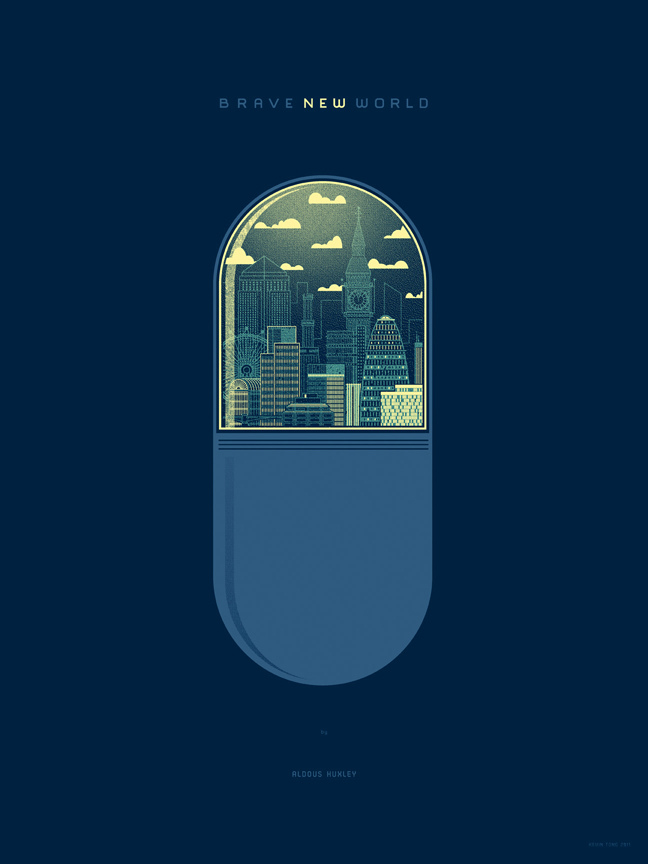
 What would you rather have: happiness for your whole life or the truth? In Brave New World, by Aldous Huxley, scientific advancements enable a futuristic dystopian government to create a society based on happiness, not truth. There are no mothers and fathers, no families and relatives. There is no social instability. Everyone is essentially the same--grown in labs all from the same egg (definitely not born)--with the only exception being specialized growth to form different social classes. Everyone is happy with themselves. Drugs (soma) and sex are a social norm and are encouraged by the government. People live to enjoy themselves.
There are however, in every society, a few defects; people who see more in life than the physical things that most people satisfy themselves with. This is Bernard Marx. The problem with Bernard is that he knows something is missing: the truth. To him, life isn't just about the constant influx of soma, but rather recognizing beauty, reaching out beyond the status quo.
This Novel is the story of truth and sacrifices. Unlike George Orwell's 1984, this book shows a dystopia oriented not around the success of the government, but rather the happiness of the people. In both novels, the theme of censorship plays a large role in maintaining order, and in both novels the "ruler" knows perfectly well about the past. These same ideas also display themselves in Ray Bradbury's Fahrenheit 451. In all three of these classic novels, it is evident that times will change and our understanding of science and technology will increase. Huxley portraits they future as a happy place, in fact, it's illegal to be unhappy, but is that future worth striving for?
“I don't want comfort. I want God, I want poetry, I want real danger, I want freedom, I want goodness. I want sin.” -The Savage

No comments:
Post a Comment